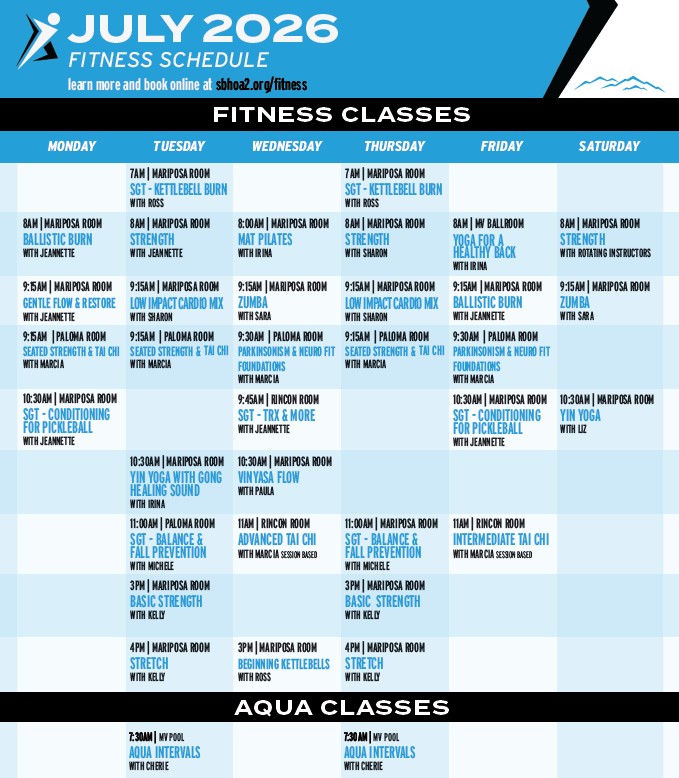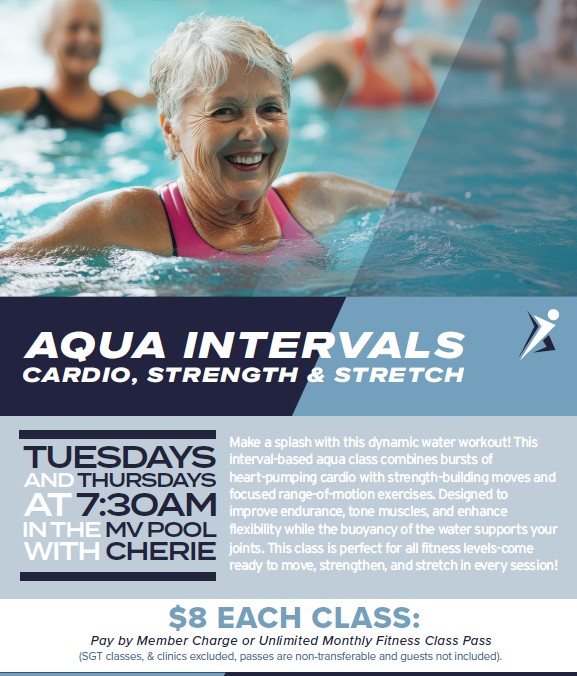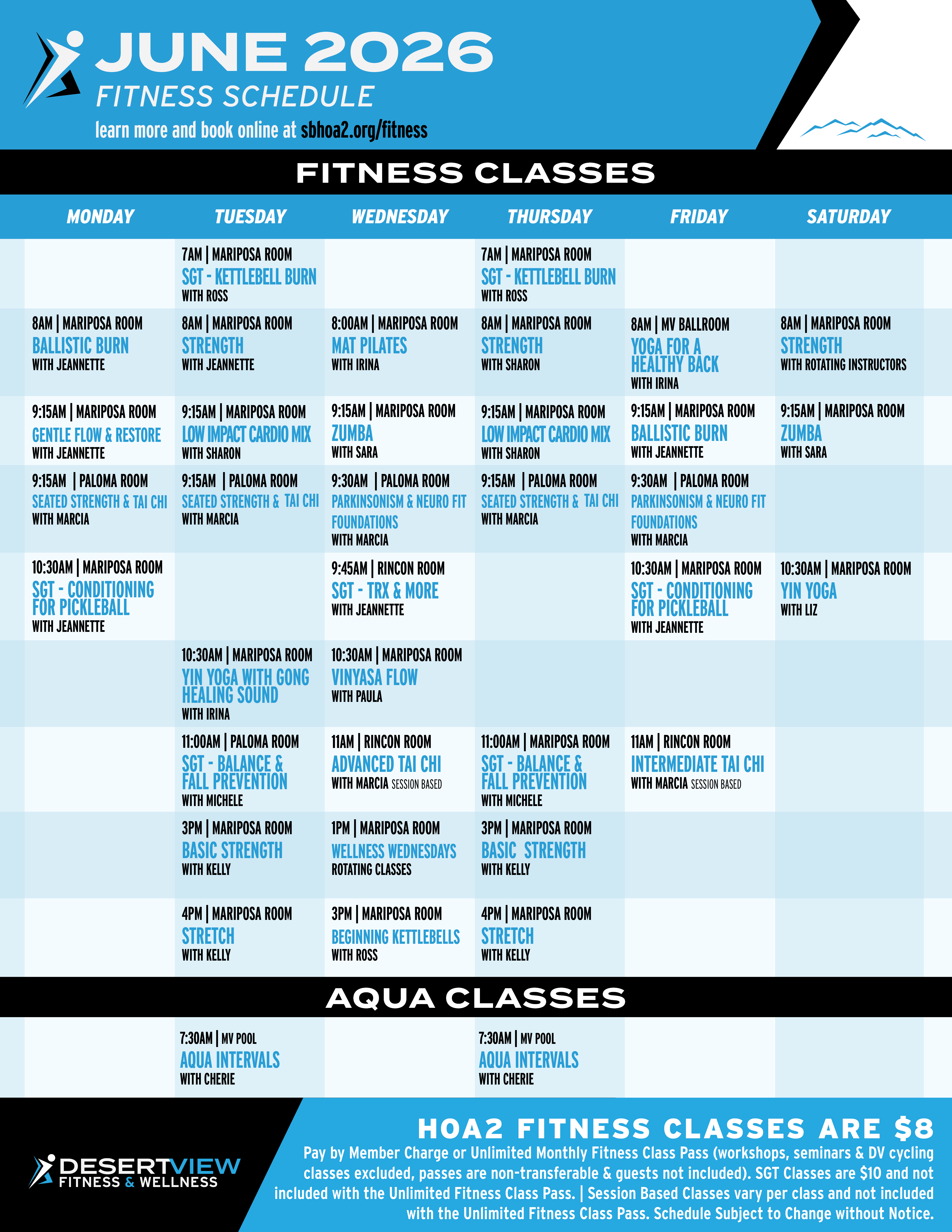
DesertView Fitness & Wellness
Information below up to date as of 7/6/26
DVFitness Updates
Stay active, stay connected, no matter where you are!Finding it tough to get space to stretch in the DV Fitness Center? The Paloma Room is now open for resident use when it’s not being used for a class or personal training session. Just stop by the front desk to access it!
-
DesertView Pool & Spa Closed for the Summer
Closed through September 1st.
The DesertView pool area will be closed for a resurfacing project both in the lap pool and jacuzzi, along with the entire deck. The DesertView Pool will be closed during the duration of this improvment project. The MountainView and Preserve Pools will operate with normal hours during this timeframe. -
Massages Available at DesertView Fitness Center
- There are many physical and mental health benefits to massage therapy.
-
To cancel your class reservation, please call the DV Fitness Center front desk.
- ALL NO Shows will be Charged. 520-818-1300
- For more information contact Jeannette Pyle via email: [email protected]
- Don’t know where to start on your own? We have personal trainers that can help! Learn More Here
DV POOL RAMADAS - AVAILABLE FOR RENT
3 Hour Rentals for Private Parties
To Go Platters also Available | Learn More
Questions? email [email protected]
Health Tip
Exercise: An effective prescription for joint pain
Joint pain can rob you of life's simple pleasures-you may no longer look forward to walking your dog, gardening, or chasing a tennis ball across the court. Even the basics of getting through your day, like getting into the car or carrying laundry to the basement, can become sharp reminders of your limitations.Keep on moving
It is tempting to avoid the motions that cause you pain. But limiting your movements can weaken muscles and make compound joint trouble worse.
And actually movement- in the form of the right exercises performed properly -can be a long-lasting way to subdue ankle, knee, hip, or shoulder pain. For some people, the right exercise routine can even help delay or sidestep surgery.
Why stretching is important
Stretching keeps the muscles flexible and healthy, and we need that flexibility to maintain a range of motion in the joints. Without it, the muscles shorten and become tight, adding more stress on joints. Then, when you call on the muscles for activity, they are unable to extend all the way. That puts you at risk for joint pain, sprains, and muscle strains.
For example, sitting in a chair all day results in tight hamstrings in the back of the thigh. That can make it harder to extend your leg or straighten your knee all the way, which inhibits walking. Likewise, when tight muscles are suddenly called on for a strenuous activity they are more likely to get injured, which means less muscle strength to support the joints.
With a body full of muscles, the idea of daily stretching may seem overwhelming. It's most important to focus on the body areas needed for critical for mobility: your lower extremities: your calves, your hamstrings, your hip flexors in the pelvis and quadriceps in the front of the thigh. Stretching your shoulders, neck, and lower back is also beneficial. Aim for a program of daily stretches.
For more on developing and mastering joint pain relief workout, read The Joint Pain Relief Workout, a Special Health Report from Harvard Medical School